The Faceless Men

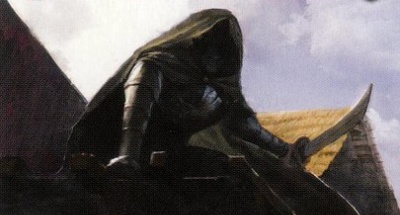
The Faceless Men are a group of assassins that pray to the Many Faced God, also known as the god of death. The Faceless Men can be found on Braavos and their home is the House of Black and White, the temple of the Many Faced God. The history of the Faceless Men is one rooted in much magic and mysticism. The first of the Faceless Men dates back thousands of years ago to the volcanic mines of Valyria, the same place where dragons were first discovered. An unknown man heard the many prayers of the different slaves working the mines, all praying to different gods. This man surmised that there must be one god, with many different faces, that these slaves were praying to.

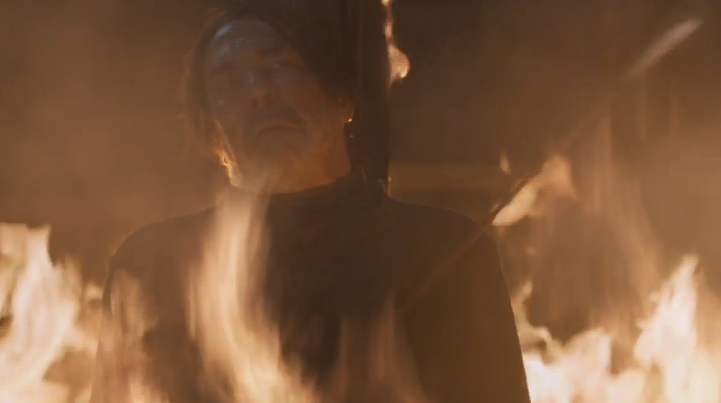
A Faceless Man at the House of Black and White

A Faceless Man at the House of Black and White

The Faceless Men are deeply rooted in the religious ideals of the Many Faced God. At the House of Black and White, followers of the the Many Faced God perform religious services such as tending to the dead. They view death as inevitable, always stating Valar Morghulis, meaning “all men must die.” As such, they offer many services around death, such as a fountain of poison which offers a painless death for those who are ready to die. The most sacred service is that of planned death or assassination. For the right price, anybody can enlist the services of the guild of the House of Black and White to kill anybody in the world. It is the Faceless Men, the most elite of the House of Black and White, who are highly trained to carry out these assassinations.

Drawing of the Faceless Men

Drawing of the Faceless Men

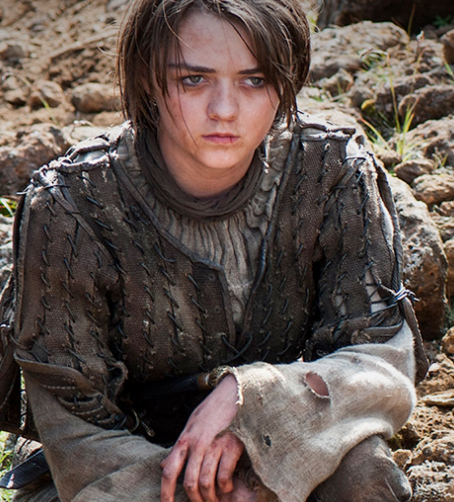
In addition to their extreme training, it is understood that the Faceless Men also deal in some level as magic, as they are able to change the appearance of their faces. The most notable of the Faceless Men is Jaqen H’ghar, whose life was saved by Arya when she freed him from a burning cage that he was locked in, on their travel to the Wall. She also saved the two other men in that burning cart. Jaqen tells Arya that she stole three lives from the Many Faced God, and in exchange, he now owes her three deaths.

Jaqen H'ghar

Jaqen H’ghar

Ellaria Sand

Ellaria Sand is the paramour of Price Oberyn Martell. She assumes the last name Sand as she is bastard-born of a noble house, much the way Snow is the bastard name given in the North. Ellaria traveled to King’s Landing with Oberyn for Joffrey’s royal wedding, where Oberyn was ultimately killed in trial by combat. After the death of her lover, Oberyn, she is intent upon avenging his death.

The Free Cities

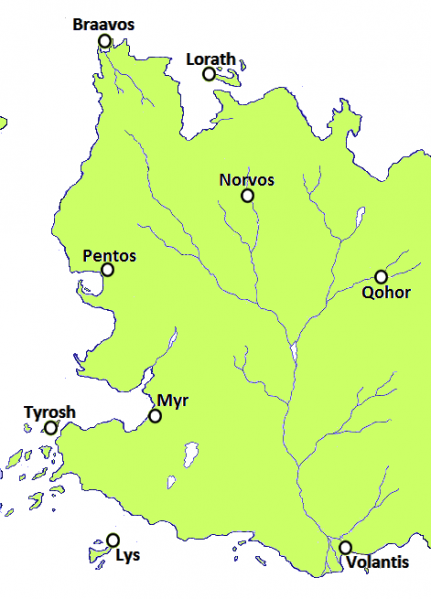
The Free Cities refers to the group of nine city-states along the western coast of Easteros. They are referred to as the Free Cities because although they were part of the Valyrian Freehold, they maintained their sovereignty and were permitted local governance to rule their local affairs independently. Conversely, there were many cities of Easteros that were directly ruled by governors of the Valyrian Freehold, and as such, these cities never became part of the Free Cities.

Westeros to the left, the Free Cities of Easteros to the right

HISTORY

The nine Free Cities are Braavos, Pentos, Volantis, Lys, Myr, Qohor, Norvos, Tyrosh, and Lorath. Though there are many differences between these cities today, such as geography, commerce and agriculture, these cities share a common culture as all but one (Braavos) were conquered by the Valyrians and became a part of the Valyrian Freehold. Though they maintained semi-independence, they absorbed much of the language and culture of the Valyrians, which is why many of the Free Cities share cultural similarities today. Braavos is the most distinct of the Free Cities, as its history is entirely different from the other eight Free Cities. Whereas the other cities were existent and absorbed by the Valyrian Freehold, Braavos remained a secret city, its existence unknown to the rest of the world, until it revealed itself during The Doom of Valyria. When Valyria being destroyed by the Doom, the Free Cities became completely independent, no longer under any central control, which is how they exist today.

The nine Free Cities

The nine Free Cities

SUMMARY OF THE FREE CITIES

Braavos is thought to be the most powerful and prosperous of the Free Cities of Easteros. Not just one landmass, Braavos is composed of hundreds of islands that connect with each other by stone bridges. Braavos was founded by Valyrian refugees that had fled their homes to escape the expansion of the Valyrian Freehold. After discovering and founding the land of Braavos, it was successfully concealed from the outside world for approximately 400 years, until the Doom of Valyria, at which point Braavos revealed itself to the rest of the world. Because it remained secret for so many years, Braavos was isolated from all outside influences and developed a very unique identity. The culture of Braavos is one that is wrapped in much mysticism and magic. Braavos is home to many mysterious landmarks and characters, such as the Faceless Man, Jaqen H’ghar and the Temple of the Faceless Men, The House of Black and White. Syrio Forel, the man who taught Arya how to fight with a sword, is also from Braavos. Other landmarks include The Iron Bank of Braavos, the most powerful bank in the world, as well as the Titan of Braavos, a massive statue that guards the entrance into the lagoon of Braavos and serves as a defense to any invaders. The words Valar Morghulis are commonly spoken in Braavos, meaning “all men must die.”

Pentos is one of the wealthiest and most prosperous cities of Easteros, deriving much of its power and wealth from its geographical landscape. Pentos is a port city and engages in trade and commerce with much of the rest of the world. It is also one of the most populous cities of Easteros, though as one of the Free Cities, slavery is outlawed. Pentos is technically ruled by an elected prince, though the governing power of the city actually rests amongst the council of magisters. One of the most powerful and prosperous of these magisters is Illyrio Mopatis. Illyrio Mopatis hosted Khaleesi and her brother, Viserys, at his palace in Pentos at the onset of Season 1. Today, Varys and Tyrion have sought refuge at this same palace.

Lys is another Free City that is composed of a series of islands. Lys is smaller and less powerful and commonly known for its pleasure houses. Well known figures that come from Lys include Varys as well as Salladhor Saan, a pirate friend of Davos Seaworth, who has fought for Stannis Baratheon.

Volantis is the most southern of the Free Cities and therefore very closed to the cities of Slaver’s Bay. As such, it deals extensively in slave trade. The most noteworthy character from Volantis is Lady Talisa, the woman who married Robb Stark, before being murdered at the Red Wedding.

Qohor is less well-known of the Free Cities, being further inland and its land full of forests. Qohor is also well known for being guarded entirely by Unsullied soldiers, a legend telling that 3,000 Unsullied defended the city against 25,000 Dothraki. A well knock character from Qohor is Locke, who came under the service of Roose Bolton and cut off the hand of Jaime Lannister, before being killed at Craster’s Keep.

Norvos is another of the less well-known Free Cities, also laying further inland. It is ruled by a council of magisters, who often pay tribute to the Dothraki who frequent the city.

Myr is another of the stronger Free Cities, also laying along the coast and deriving much of its supremacy from trade. The most notable character from Myr is Thoros of Myr, a priest to the Lord of Light and leader of the Brotherhood without Banners.

Tyrosh is another coastal Free City that is commonly involved in trade, namely the trade of slaves. They are known for crafting fantastic armor. The most notable character from Tyrosh is Daario Naharis, who leads the Second Sons under Khaleesi’s command.

Lorath is the least known of the Free Cities. For some time, Jaqen H’ghar was posing as a man from Lorath.

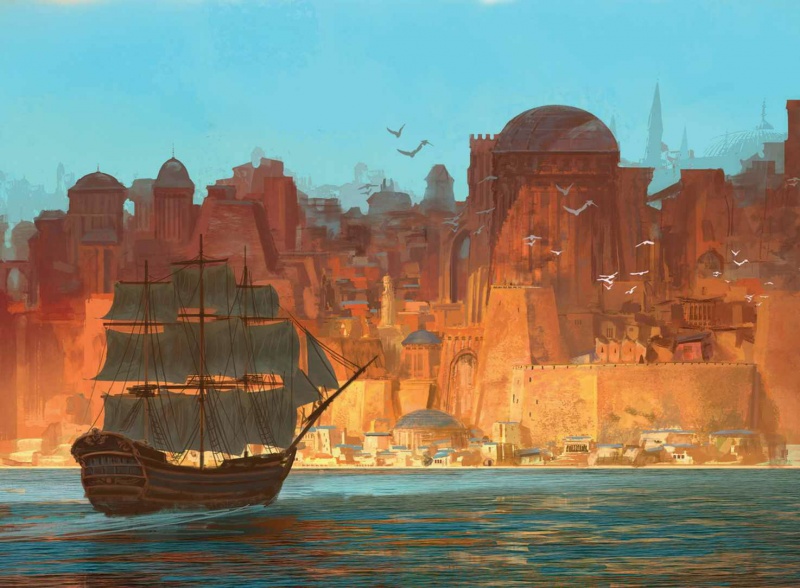
Pentos

Pentos is one of the nine Free Cities of Easteros. It is one of the wealthiest and most prosperous cities of Easteros, deriving much of its power and wealth from its geographical landscape. Pentos is a port city and engages in trade and commerce with much of the rest of the world. It is also one of the most populous cities of Easteros, though as one of the Free Cities, slavery is outlawed.

pentos

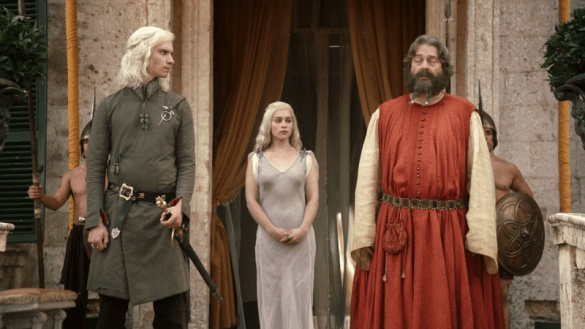
Pentos is technically ruled by an elected prince, though the governing power of the city actually rests amongst the council of magisters. One of the most powerful and prosperous of these magisters is Illyrio Mopatis. Illyrio Mopatis hosted Khaleesi and her brother, Viserys, at his palace in Pentos at the onset of Season 1. Today, Varys and Tyrion have sought refuge at this same palace.

Illyrio Mopatis, hosting Khaleesi and her brother at his palace in Pentos

Pentos was originally conquered by the Valyrians hundreds of years ago and established as a trading outpost during the expansion of the Valyrian Freehold.

Season 5, Episode 1: The Wars to Come

Disclaimer: There are no spoilers in this article. Any views or opinions expressed are based solely on where the Game of Thrones TV series currently is and no other knowledge or information is presented in this article.

A NEW SEASON, A NEW WORLD

Finally…We can all breathe a sigh of relief, the wait is over and Thrones is back. Yet, after watching the Season 5 premiere, some of us may have been left feeling a bit underwhelmed, perhaps even a bit slighted. After all, we waited a full year for Thrones to return, shouldn’t the kickoff episode have been packed with a bit more action? No beheadings, no betrayals, no battles and no scandalous sex scenes at all — I mean come on — where were all the things that we’ve grown so accustomed to seeing out of Thrones on weekly basis?

And yet still, it would be foolish to not read between the lines and recognize the way that this premiere episode set the stage for the journey that we are about to embark upon. While there weren’t any major plot progressions or jaw-dropping reveals in this premiere episode, one very loud and unmistakable message was sent: viewers beware, we are in a bold new world. This is not the Thrones world you’ve come to know over the last four seasons and the whatever predictability of the world we grew to know is now gone. Tywin, the man responsible for directing so much of “the game” we’ve come to understand,  is dead; Tyrion, another Lannister who kept much of the game in motion, is now halfway across the world; House Bolton officially rules from the seat of Winterfell; while Stannis now calls the shots at the Wall. And these were just a few of the major changes we faced in the opening episode. In this new world, there are new games to be played, new rules to those games and new players to play them. In an episode entitled The Wars to Come, it is important to recognize that the landscape of Westeros has vastly changed in the aftermath of Season 4, and believe it or not, what comes next in this new world appears even more unpredictable than ever.

THE END OF A LANNISTER ERA

Hinting at the fact that things are more different than ever, Season 5 kicks off with something viewers have never before seen — a flashback. We not only see the bratty malevolence that Cercei possessed even as a youth, but we also learn that much of the ill fate Cercei is experiencing before our eyes today, she was actually made aware of 20+ years ago. As Cercei goes to visit a witch in the woods, she tells the witch that she’s been promised to be married to a prince but the witch tells her that she will in fact marry a king. As viewers, we now know that the prince young Cercei was referring to was Rhaegar Targaryen, but that they never married, as he was killed by Robert Baratheon during Robert’s Rebellion. And instead, Cercei ends up marrying King Robert, as the witch told that she would. The witch goes on to tell her that she will be queen, until she is replaced by one younger and more beautiful (Margaery). Most important, referring to Cercei’s three future children, the witch states “Gold will be their crowns, gold will be their shrouds,” referring to their funeral shrouds, implying that death surrounds Cercei’s children. Having lost one child already during his reign as king, having a second son reigning as current king, and her third child, Myrcella, halfway across the world in the hands of their enemies, House Martell, perhaps Cercei should have listened a bit closer to the prophetic words of the fortune teller she sought out as a child.

unnamed-11

The young Cercei

Flash forward, we see that Cercei’s problems extend beyond just her children, and that an enormous void is left by the death of Tywin Lannister. Though never actually king, as we look upon Lord Tywin laying dead in the Great Sept, we feel as though we have witnessed the death of a king, a testament to the immense power that Tywin commanded in his life. And as the morose notes of The Rains of Castamere play in the background, a song which once reminded of the strength of House Lannister, we now see a much different version of this once all-powerful house — one that appears to have been reduced to no more than the revenge-driven Cercei and one-handed Jaime. And as they discuss all that Lord Tywin built for their house, Jaime reminds his sister of all the schemers and plotters that will look to prey upon their weakness as he tells her, “they are going to try to take it away…all of it.” And while it appears that we’ve witnessed the end of the Lannister era as we once knew it, Jaime tells Cercei that they must stick together to defend what their father has built, while Cercei seems more intent upon focusing on the fact that Tyrion is still out there somewhere. To say the least, with Tywin dead and Tyrion across the Narrow Sea, there’s discord amongst the Lannister twins at a time when they can least afford it.

The death of Lord Tywin, marking the end of a Lannister era

The death of Lord Tywin, marking the end of a Lannister era

OUT OF THE BOX

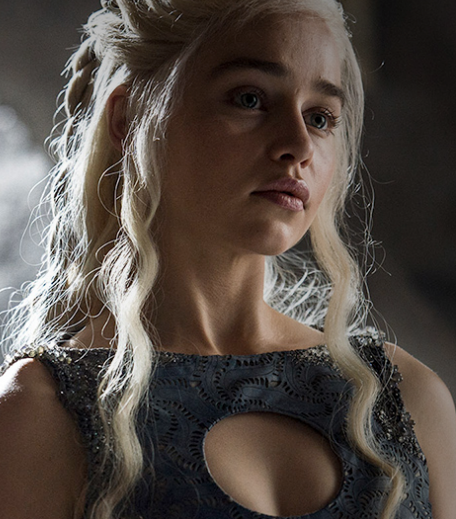
After weeks of being confined to a crate on a ship, Tyrion is finally released to see the realities of his new world — one where he finds himself in Pentos, with Varys, at the palace of Illyrio Mopatis, a character we’ve not seen since the first season. And right away, Varys reveals something very major. He tells Tyrion that he and Illyrio belonged to a group of people who saw King Robert’s reign as a disaster and aimed to do what was best for the realm by restoring the Targaryen dynasty. In other words, the two of them had been working together behind the scenes to help Khaleesi retake the thrown. Looking back to season 1, we can connect many of the dots. For starters, it was Illyrio Mopatis who hosted Khaleesi and her brother, Viserys, at his palace in Pentos when season 1 started.

From Season 1: Illyrio, in Pentos, harboring Viserys and Daenerys Targaryen

Illyrio brokered the marriage to Khal Drogo in an effort to put an army at the back of the Targaryens. It was also Illyrio who gave Khaleesi her three dragon eggs as a wedding present, which would go on to hatch into three living dragons — the first in hundreds of years. It had been clear that Illyrio was aiding the Targaryens, but it was not until halfway through the first season that we learned that Varys was equally involved with this plot, though much more behind the scenes. As Illyrio visits King’s Landing and walks the dungeons with Varys, Arya overhears them talking about the Targaryen claim which they are backing, and as they discuss the impending war between the Starks and the Lannisters, Illyrio notes that Khal Drogo and the Targaryens are not yet ready to make their move on Westeros, and that they need to buy more time. In short, this scene (see video below) showed us that Illyrio and Varys were plotting for a long time to back the Targaryen restoration. And now, four seasons later, it all comes full circle as Tyrion and Varys end up in Pentos at the palace of Illyrio, and Varys for the first time explicitly tells Tyrion of his plot, one that went terribly wrong.

And as we so often ask ourselves what the true motives of certain characters are, especially ambiguous ones such as Varys, we once again hear what Varys professes to want to most: peace and prosperity for Westeros. Though his plan to get Khaleesi back on the Throne did not yet come to fruition, he seems more decided than ever that she is the one true ruler who could achieve this — one that could strike fear in the powerful Lords of Westeros while inspiring greatness and compassion amongst the weaker. She has the army, the dragons and the right last name. And he now turns to Tyrion to assist him in the pursuit of helping Khaleesi to ascend the Iron Throne.

Speaking of which, it will be interesting to see what comes next for Tyrion. To date, he has been a character utterly defined by his Lannister last name. In Season 4, when Shae would so often beg Tyrion to leave King’s Landing and start a life elsewhere with her, he would always reply that he is a Lannister — what purpose would he possibly have in Easteros, away from “the game” taking place at King’s Landing? After professed that he was good at the game and he enjoyed playing it. Ironically — away from King’s Landing, halfway across the world in Easteros is now precisely where he finds himself, only under an entirely new set of circumstances. So far from his familiar world of King’s Landing and almost entirely removed from his Lannister landscape, will Tyrion find new purpose? What man will he become? And will he ultimately make his way to Mereen, along with Varys, and meet the Mother of Dragons?

tyrion

TROUBLE IN KHALEESI’S NEW WORLD

Which brings us to the new world that Khaleesi is trying to create amongst the slave cities of Easteros. Symbolic of the old ways she is uprooting and the new world she is creating, Khaleesi’s Unsullied tear the giant harpy off the Great Pyramid of Mereen. And as we recall from the end of Season 4, Khaleesi offers that the slave masters of Yunkai could “live in my new world, or die in their old one.” We see that the more Khaleesi tries to cultivate this new world, one where slavery is absolutely forbidden and justice will always be recognized, we also see the obstacles she faces — ones that may deter her from her eventual goal of reclaiming the Iron Throne. First, we see one of her Unsullied murdered by a member of the Sons of the Harpy, a resistance group that has raised up in defiance of the new world she is trying to create. Khaleesi insists that he be buried publicly in the Temples of the Graces, despite her advisors warning that this will further anger the Sons of the Harpy.

In addition to these issues she faces in Mereen, as Daario Naharis returns from Yunkai, Khaleesi learns that the ex-slave masters have asked her to allow the continuance of the fighting pit, something which she refuses. As she later chats about this with Daario in bed, he reminds her that she is the Mother of Dragons and that if she wants to have success in her new world, her dragons must be a part of it. But, when she goes to check on her two dragons which have been locked up for some time, we see that they have not only grown extremely large, but that they also appear more uncontrollable than ever. Furthermore, it’s been weeks since anybody has spotted Drogon, the largest of the three dragons. As this season unfolds, it will be interesting to see how dedicated Khaleesi remains to establishing her new world versus shifting her sights towards the ultimate goal of claiming the Iron Throne.

Kh

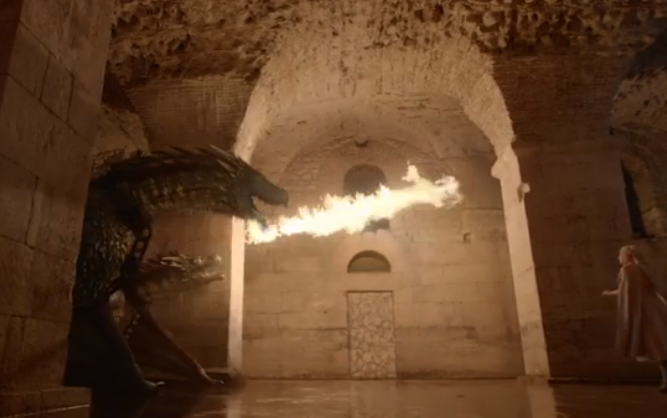
Khaleesi & her dragons

THE WALL

Elsewhere, we once again see that everything has changed with major unpredictably surrounding what comes next at the Wall. In the aftermath of the battle between the Night’s Watch and Mance Rayder’s army of Wildlings, we see a depleted Night’s Watch that is now somewhat backed by Stannis Baratheon’s army. As Jon Snow ascends the Wall, Melisandre asks him if he is a virgin. When he informs her that he is not, she responds, “good,” with a sinister grin. Atop the Wall, Stannis tells Jon Snow that he plans to retake Winterfell from House Bolton and wants the Wildlings to fight for him. All Mance has to do is bend the knee, to which he of course refuses. As Jon Snow tells Mance he is making a mistake, Mance responds “All I ever wanted was the freedom to make my own mistakes.” Even when faced with being burned alive, Mance would rather die a free man than acquiesce to the rules of the southern kingdoms and bend the knee. And as everybody looks on as he begins to burn, Jon Snow puts an arrow in his heart to prevent the horrible death Mance was about to experience.

mance

EVERYTHING ELSE

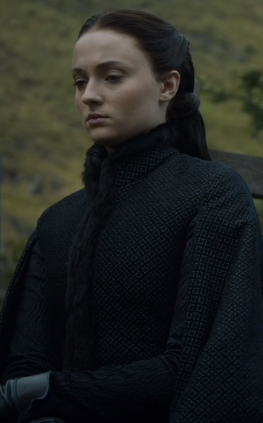
In a roundup of some of the smaller scenes of the premiere episode, we see the continued journey of Brienne and Pod, who in their new world, appear to lack any true purpose or destination. Sansa, appearing darker than ever, continues to journey on with Littlefinger, and on their new path together, leave Robin Arryn with Lord Royce for safekeeping. We also see Lord Baelish receive a message, which undisclosed, he stashes in his sleeve. Once in private, Baelish tells Sansa that they are going somewhere so far away that even Cercei cannot find Sansa. And back in King’s Landing, Lancel Lannister, Cercei’s cousin, reappears as a Sparrow, stating that he has found peace in the Light of the Seven. He apologizes to her for their unnatural relations, and also for the part he played in serving Robert Baratheon the very strong wine, which led to his hunting accident and eventual death. Though it had been implied previously, we receive explicit confirmation of the role that Cercei played in killing her husband and the King. And as the season premiere comes to a close, while we may not have witnessed any singularly gamechanging events, this new season presents a new world, one where the game appears to be changing and anything could be possible.

sansa

Sansa, appearing darker than ever

Season 4 Recap/Season 5 Primer

Screen shot 2015-04-12 at 5.33.29 PM

OVERVIEW

When one season comes to an end, it always seems like years until the next season starts. But, that long wait has just about come to an end, and it’s time to get catapulted back into the Thrones world, this Sunday, April 12th. And one thing’s for sure,: season 5 is going to move faster than ever. Many new characters and places will be introduced, while existent plot-lines and stories will advance more rapidly. For maximum enjoyment (and understanding) of the upcoming season, it’s important to look back at season 4 and process everything that happened. From impending White Walkers to Wildlings marching on the wall, from the death of another king to growing dragons — there was a lot that transpired. And if you don’t have 10 hours to rewatch the entire season, don’t worry, you’re in luck. Here’s is your cheat sheet to recap all the major events and plot progressions of season 4.

WHAT’S GOING ON IN KING’S LANDING?

Where else could we kick off besides King’s Landing, home to so many of the schemers and plotters whom are trying to “play the game.” As season 4 begins, the landscape of King’s Landing appears to be changing, as discord amongst the Lannister family heightens and threats to their power arise. Fit with a new golden hand after having recently arrived home to King’s Landing, Jaime is met by a father who demands that he return to Casterly Rock to rule in Tywin’s place; after all, Jaime is heir to Casterly Rock. No surprise, Jaime refuses and states that he will remain in King’s Landing as Lord Commander of the King’s Guard. As viewers, we know that this is primarily because he wants to remain close to Cercei. But as the plot continues to thicken for the Lannisters, we learn that Cercei no longer feels the same way about Jaime. She tells him that “everything has changed,” and that he “took too long” to return from his imprisonment.

But Jaime is not the only recent arrival to King’s Landing, as we are introduced to Prince Oberyn Martell, aka the Red Viper, of Dorne. From the moment he arrives, the Red Viper makes it very clear why he has arrived at King’s Landing. He seeks revenge for the death of his sister, Elia Martell, who was married to Prince Rhaegar Targaryen, Khaleesi’s eldest brother. After Robert’s Rebellion, when the Mad King was overthrown, Lord Tywin allegedly ordered Gregor “The Mountain” Clegane to eliminate the rest of the royal family. The Mountain killed Princess Elia’s two babies, before raping and killing her as well. For many years, House Martell has sought revenge for these actions.

Prince Oberyn Martell, otherwise known as the Red Viper

The Red Viper, telling Tyrion of his plan to avenge his sister, Elia

And as things continue to deteriorate for the once seemingly impenetrable Lannister family, Tyrion is not exempt. He is forced to deal with the awkward marriage to Sansa, a girl who’s suffered the deaths of many of her family members at the hands of Tyrion’s family. Even worse, Tyrion must protect the woman he does actually love, Shae, by telling her lies to force her away. After making many attempts to gently tell her that King’s Landing is not safe for her, he takes more aggressive measures and must painfully tell her that she is nothing more than a whore and that their time is done. He tasks his loyal friend, Bronn, with getting her on a ship out of King’s Landing.
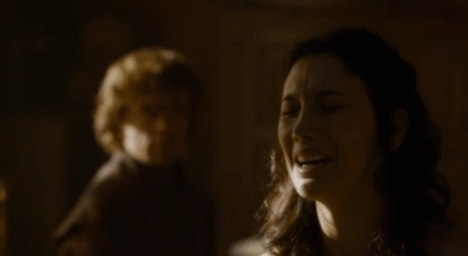
To save her life, Tyrion must break her heart and pretend that he does not love her

THE NORTH

In the North, it is more clear than ever that Winter is Coming and darkness is coming for all. As Jon Snow breaks away from the Wildlings and returns to the Wall, he informs the depleted Night’s Watch of Mance Rayder’s plan to march on the Wall with the massive army of 100,000 Wildlings that he has assembled. With some of the Wildlings already south of the Wall, some brothers propose that the Night’s Watch hunt them down, while Jon Snow reminds that they must stay at the Wall, as they are the absolute last line of defense between Mance’s army and all of humanity south of the Wall. Though, that quickly changes when Jon Snow learns that the mutineers who killed Lord Commander Mormont have shacked up at Craster’s Keep. He proposes that some of the Night’s Watch go to Craster’s Keep, not for revenge on the mutineers, but because the Night’s Watch must get to them before Mance Rayder does. If Mance Rayder gets to them first, he will learn of all the secrets and defenses of the Wall, and easily march his army south. Jon Snow leads a small band of brothers north of the Wall and in a small battle, kill the mutineers, before safely returning to the Wall.

Another important storyline taking place in the North is that of Bran and company. As he continues further north to find the 3-eyed raven, he encounters a magical weirwood tree. After putting his hand to the tree, we continue to see Bran’s power not only as a warg, but also as a Greenseer. Bran has visions not only of things that have happened in the past, such as the beheading of his father, but also prophetic visions of things that are yet to come. The first important visions appear to be a future vision of the Throne Room, the room in King’s Landing that houses the Iron Throne. In his vision, the Throne Room appears empty and desolate, dark and gloomy, with the walls torn down and snow falling to the ground. Interestingly, Khaleesi had this same exact vision in the season 2 finale when she entered the Warlock’s House of the Undying.

The desolated Throne room, a vision Bran and Khaleesi both saw.

Perhaps more important is the vision Bran has of a mysterious and magical weirwood tree. As he sees this tree, a voice says “Look for me beneath the tree. North.” As Bran comes out of his visions, he appears more confident than ever in where his journey must lead — he must head north to find this voice beneath the tree.

The weirwood tree in Bran’s vision; he hears the words “Find me, beneath the tree.”

KHALEESI GROWS STRONGER

Armies aren’t grown in days, kingdoms aren’t sacked in weeks, and queens do not come of age overnight. And while the journey of Khaleesi may seem never-ending, it is a more realistic portrayal of that hardships faced when trying to build an army on a quest to conquer the Seven Kingdoms. So where’s Khaleesi at now?

After freeing and then acquiring an army of 8,000 deadly Unsullied warriors from the city of Astapor, Khaleesi goes on to gain another 2,000 Second Sons soldiers, led by Daario Naharis. Furthermore, she frees the people of Yunkai, who proclaim her as “Mhysa,” or mother. She then continues her journey to Mereen, where she leads the slaves to slay the masters, before capturing the Mereenese navy of 93 ships. With strong commanders in the name of Ser Jorah Mormont and Ser Barristan Selmy, military generals in Grey Worm and Daario Naharis, an army of 10,000 soldiers and 93 ships — Khaleesi now has everything she needs to cross the Narrow Sea and conquer the Seven Kingdoms…Oh, and let’s not forget about those 3 dragons that have grown insanely large. But, just as things are looking good for Khaleesi, she gets a copy of Ser Jorah’s royal pardon, signed by Robert Baratheon, and she learns that Ser Jorah was originally working in conjunction with Varys to report back to King’s Landing on Khaleesi’s progress. Of course, that was in the past and since then, Ser Jorah has grown to love Khaleesi and would give his life for her, but Khaleesi sees this as betrayal and dismisses Ser Jorah from her service.

Lastly, after learning that one of her dragons had killed a three-year-old boy in Mereen, Khaleesi locks up two of here dragons, while the whereabouts of third (and largest), Drogon, is unknown.

Screen shot 2014-06-02 at 11.57.57 AM

Khaleesi dismissing Ser Jorah

THE PURPLE WEDDING & PETYR BAELISH

Perhaps the most rewarding death thus far, we finally see King Joffrey die at his wedding to Margaery Tyrell. As he gasps for his last breaths of air after being poisoned, Tyrion is left standing over the cup that Joffrey had been drinking from. And with the disappearance of Sansa from the wedding, Cercei immediately accuses Tyrion of being responsible for the murder of her son.

Meanwhile, Ser Dontos leads Sansa on a suspenseful escape of King’s Landing, which eventually leads to Petyr Baelish’s ship, which is already out on the sea. After killing Ser Dontos, Baelish reveals to Sansa the full extent of the murderous plot. While Baelish appeared to be in service to the Lannisters, he sensed their weakened position, and thought it to be wiser to forge a behind-the-scenes alliance the with Tyrells, who naturally wanted Joffrey dead, so that Margaery did not have to marry a madman. Baelish acquiesced and had a necklace forged, with one of the stones being a fake that held poison. Ser Dontos, a pawn in Baelish’s plot, gave the necklace to Sansa who wore it around the neck at Joffrey’s wedding. During the wedding, Olenna Tyrell, Margaery’s grandmother, slips one of the stones off Sansa’s necklace and drops it in Joffrey’s wine, delivering the poison. Ser Dontos then leads Sansa to Baelish, as they head for the Eyrie where Baelish will marry Lysa Arryn and become Lord of the Vale. It is as this point that Baelish reveals that he is a man of great ambition, and when Sansa asks him precisely what he wants, he responds “I want everything.”
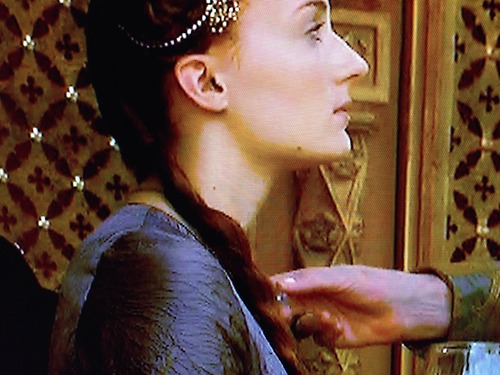
Lady Olenna, removing the poison vile from Sansa’s necklace

When they arrive at the Eyrie, rather than being warmly embraced by her aunt, the first family she has seen in years, Sansa is met by an aunt filled with jealousy and resentment towards her. Furthermore, there is a MAJOR reveal, when speaking of her loyalty to Petyrn, Lysa goes on to mention that she executed Petyr’s plan to poison her husband, Jon Arryn, and then wrote a later to her sister, Catelyn, lying that she suspected the Lannisters to be the culprits of this murder. Looking back, we know that when Jon Arryn, Hand to the King, died and Catelyn received a letter from his sister secretly telling her that the Lannisters were behind this, this served as the catalyst for Ned Stark going to King’s Landing to investigate and serve as new Hand. Of course, Ned’s suspicion of the Lannisters led to his eventual beheading, which caused Rob Stark to raise an army which would eventually lead to the death of him, his mother and most of his Northern army at the Red Wedding. Had Lysa Arryn not poisoned her husband and led the Starks to believe the Lannisters were responsible, none of this madness would have followed, and the Stark family would likely be safe and well, still residing over the North from Winterfell. So what we learn, four seasons later, is that Baelish has been scheming behind the scenes from the very first episode, with a grand plan to pit the Lannisters against the Starks, allowing him to capitalize at just the right moment.

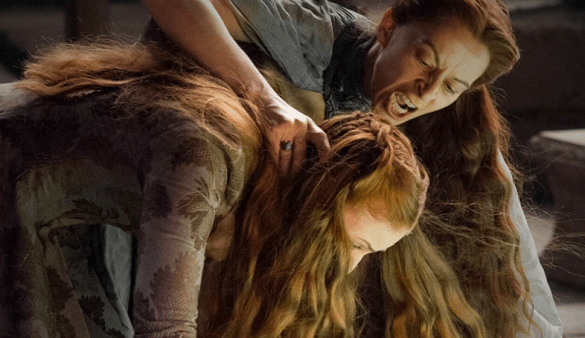
At the Eyrie, after witnessing an exchange between Sansa and Petyr, Lysa boils over with envy and threatens to throw Sansa through the Moon Door. Instead, Petyr pushes Lysa through the Moon Door as she falls to hear death. When questioned by the Lords of the Vale, Petyr lies and says that Lysa jumped to her death, and rather than telling the truth, Sansa decides to support Baelish’s lies. Before leaving the Vale, Sansa dies her hair black, perhaps to disguise her true identity, or perhaps a representation that the sweet innocent girl that once existed is now dead, hardened by the all the death and torture she has endured for years in King’s Landing. And now, perhaps a more sinister Sansa has emerged, finally learning how to tell a lie and “play the game” as Baelish has been trying to teach her. With Lysa Arryn dead, Robin, a sickly boy, is now acting Lord of the Vale.

Screen shot 2014-05-19 at 1.30.46 AM

ARYA & THE HOUND

Perhaps one of the most powerful storylines of season 4 was the evolution of the relationship between the Hound and Arya. A man we once hated and no doubt saw as a villain, slowly won over a soft spot in our hearts as he began to emerge as more of a “misunderstood good guy” who was intent upon keeping Arya safe. As they journeyed through the Riverlands, they ate, slept and even killed together. After a long journey, they finally arrive at the Vale, where the Hound planned on returning Arya to her aunt, Lysa, in exchange for gold. However, they arrive only to find out that Lysa has just died (murdered by Baelish). And in the finale, Brienne, who is now with Podrick Payne, searching for Sansa, encounters the Hound and Arya. Upon learning that she is still alive, Brienne insists that Arya is safer with her and notes that she swore an oath to Catelyn Stark to save her daughters. A fight ensues between Brienne and the Hound — a departure from the normal good guy vs bad guy scenario — we see good guy pitted against good guy. And in this lose-lose scenario, we sadly see the Hound thrown over a cliff, where he is critically wounded.

Screen shot 2014-06-16 at 12.53.38 PM

The Hound vs Brienne

As he begs Arya to end his life and put him out of his misery, Arya simply takes his gold and leaves him there to die. After such a long journey together, this was painful to watch, but a reminder that Arya’s heart has grown cold, and beats only for one thing: revenge.
Screen shot 2014-06-16 at 12.55.19 PM

Arya leaves the Hound to die

And as she journeys on alone, she finally uses the magical coin given to her by Jaqen H’ghar two seasons ago, and says those famous Braavosi words, “valar morghulis,” meaning “all men must die.” Instantly, she is granted passage on the Braavosi ship and just like that, she is on her way to Braavos.

HOUSE BOLTON & REEK

In the North, Roose Bolton returns home to the Dreadfort, after playing his role in the Red Wedding. With the Starks virtually eliminated and Wintefell burned to the ground, the Boltons now maintain the power over the North. Roose returns home to his bastard son, Ramsey, who we learn has been the one torturing Theon for so many months. We also see that Theon is dead, and now in his place exists Reek, a weak and sickly servant of Ramsey, broken by all the torture he endured. From that torture, Ramsey was able to ascertain a powerful piece of knowledge which virtually nobody but House bolton is aware of at this point: Bran and Rickon are not dead — Theon never killed them. Meaning, they are still rightful heirs to Winterfell and Lords of the North, threatening House Bolton’s claim to the North. As such, Roose Bolton sets out to find the boys before anybody else does.

Screen shot 2014-06-02 at 11.58.05 AM

Ramsey returning to his father, Roose, after capturing Moat Cailin

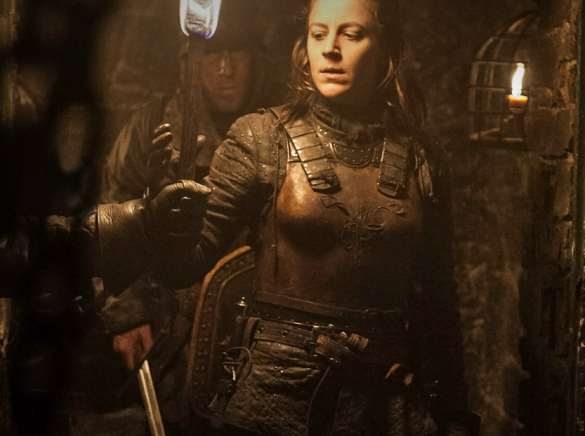
Learning that her baby brother has been held captive by the Boltons, Yara Greyjoy leads a fleet of 50 men to rescue him. She risks her life and infiltrates the Dreadfort, only to find that Theon is dead, and in his place lives only Reek, who doesn’t even recognize his own sister. She is forced to retreat and head back to the Iron Islands.

yara

Separately, Ramsey defeats the remaining Iron Born who had gained control over Moat Cailin, a strategic location in the North that allows safe passage south. He did this by having Reek pretend that he was Theon, Prince of the Iron Islands, before revealing that he was actually acting for House Bolton, at which point Ramsey’s army crushed the Iron Born and retook Moat Cailin, giving them full control of the North.

THE FAR NORTH

Even further north, we get first glimpse into the world of the White Walkers. Since the second season, we’ve known that Craster leaves his male babies in the forest for the White Walkers to take. Yet, it’s been unclear what exactly they do with these babies.  Well, we finally got an answer to this question. As a White Walker marches on his dead horse with baby in hand, we get the feeling that we are now in the very deep North, perhaps the Land of Always Winter — the most northern part of Westeros — a region that is always stuck in winter and where it is said the White Walkers come from. The White Walker arrives at what looks to be a mysterious ice city or castle and we finally get some glimpse into where the White Walkers might reside.
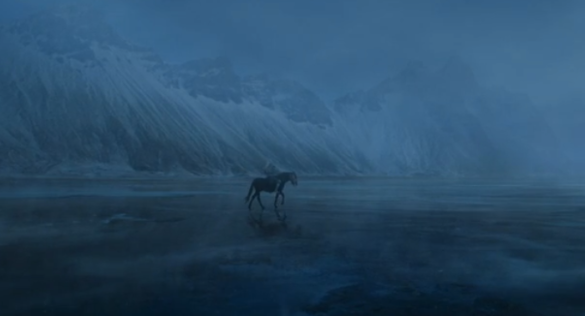
Screen shot 2014-04-28 at 4.57.34 PM

A White Walker headed into the deep north
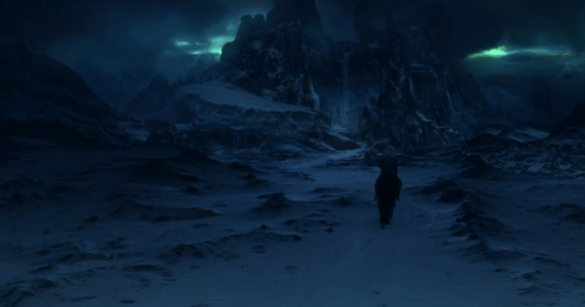
Screen shot 2014-04-28 at 4.58.47 PM

A mysterious castle

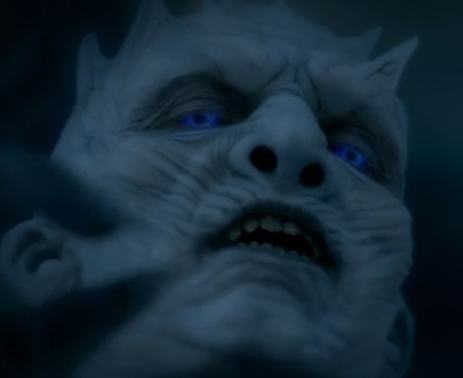
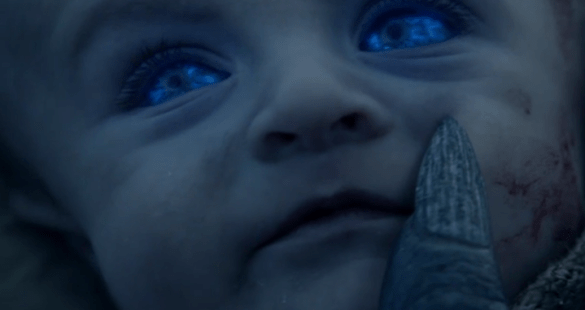
As the baby is placed in the middle of what we would believe to be an altar of some sorts, another creature comes for the baby. It is assumed that this creature was a White Walker, but clearly had a much different appearance from the White Walkers we’ve seen thus far. He appeared to be wearing all black clothing, different from that of the White Walkers. His eyes were a much deeper blue and he had spikes coming out from his head, versus the long grey hair of the White Walkers we have seen thus far. As such, we are left to wonder what exactly this creature is — perhaps a leader or god of the White Walkers.

Screen shot 2014-04-28 at 5.02.19 PM

Pressing a finger to the face of the baby, the baby’s eyes turn a deep blue, like that of the White Walkers and it appears that we may have just witnessed how a White Walker is created.Screen shot 2014-04-28 at 4.55.22 PM
TRIAL BY COMBAT

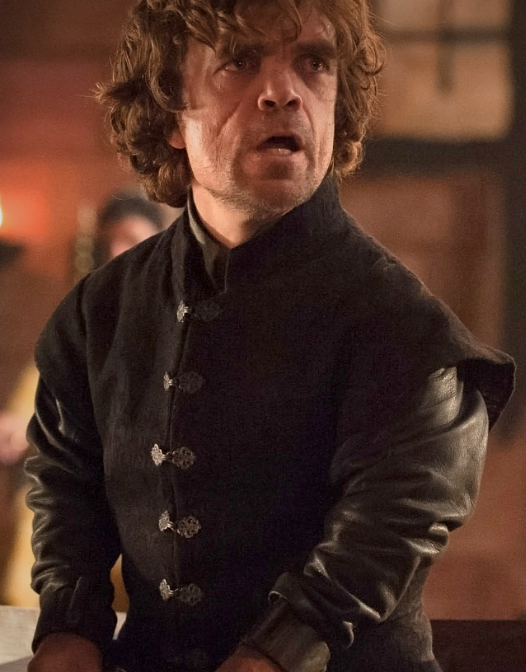
Back in King’s Landing, Tyrion’s trial finally begins, with his fate to be decided by three judges: Tywin, Mace Tyrell and Oberyn Martell. As we can predict, Tywin is to judge his son guilty, and Mace Tyrell will judge whatever Tywin tells him to. It is assumed that Oberyn will do the same, being that Tywin offered Oberyn an opportunity to be judge, in exchange for arranging a chance to face off with the Mountain and avenge the death of his sister, Elia. As the trial begins, we see a plethora of characters testify against Tyrion, many whom tell lies. His fate is sealed when Shae testifies that Tyrion and his wife, Sansa, plotted to kill the king. More painful than the idea of his imminent execution is the betrayal by Shae, the woman he truly loved, and was only trying to protect. We are presented with a more realistic view of love, one which reminds us that it will not always prevail, rather than the romanticized storybook version we are used to seeing. And after all of this, when Tyrion has absolutely nothing left to lose, he confesses to being guilty..of being a dwarf. He powerfully tells, “I did not kill Joffrey, but I wish that I had. Watching that vicious bastard die gave me more relief than a thousand lying whores. I wish I was the monster you think I am. I wish I had enough poison for the whole pack of you. I would gladly give my life to watch you all swallow it. I will not give my life for Joffrey’s murder and I know I’ll get no justice here, so I’ll let the gods decide my fate. I demand a trial by combat.”
tyrion

Tyrion, giving his powerful speech at his trial

And just like that, we are set up for the greatest single combat we’ve seen to date. Cercei, true to form, nominates the Mountain as her champion, the largest man in all of the Seven Kingdoms. And as things come full circle, Prince Oberyn’s opportunity to avenge his sister is presented, as he steps forward to champion Tyrion. In an unbelievably suspenseful combat which puts the Mountain’s power and strength against the Red Viper’s speed and agility, Oberyn has the fight all but won, until the Mountain sweeps Oberyn off his feet and crushes his head in.

Screen shot 2014-06-02 at 11.58.12 AM

And as quick as Tyrion had some hope, he is now sentenced to death. And while his older brother could not champion Tyrion due to his hand, he is still intent upon saving his baby brother, no matter what the cost. In the middle of the night, he frees Tyrion from his cell. As Tyrion makes his way through the Red Keep, he finds Lord Tywin sleeping, with none other in his bed than the woman he loved, Shae. Showing no mercy, her murders Shae, before putting an arrow in his father and killing the most powerful man of Westeros. He continues his escape onto a ship, where he is met by Varys, a man that has said several times he believes that Tyrion is one of the few good man of this world who can truly make a difference. Turning back to return to King’s Landing, Varys hears the city bells erupt and realizes that Tyrion has committed a great act of murder. Rather than returning to this scene of chaos, Varys decides to join Tyrion on their journey to Easteros — Varys’ original birthplace and a location where he has many friends and resources, namely Illyrio Mopatis.

And while the Red Viper almost killed the Mountain, he still has a touch of life left in him, and is turned over to Maestar Qyburn, who believes that through his unorthodox practices, he can save the Mountain. He notes that it will “not make him any weaker,” and we see his strange science experiment set up, seeming like he may create an even greater monster than the Mountain already is.

Maestar Qyburn experimenting on the Mountain

 WATCHERS ON THE WALL

In the second to last episode, we see another epic battle scene, one of only two true battles that we’ve seen in four seasons (the other being the Battle of Blackwater Bay). It was a massive battle with the Wildling siege of the Wall having been built up for four full seasons. With the entire 50-minute episode being dedicated to this battle, it was particularly gripping to see the reality of being The Watchers on the Wall — the absolute last hope and line of defense between the Seven Kingdoms and all the threats that lurk north of the Wall. It was amazing to see the intricacies of the top of the Wall, which were built by Brandon Stark over 8,000 years ago, using the help of giants and the magic of the Children of the Forest. It was equally special to actually witness the way the Night’s Watch defends the Wall, using tactics and strategies that have been practiced for thousands of years. Prior to this episode, we had understood that this Wall was a defense structure and that the Night’s Watch defends the wall, but we had no idea exactly how the Wall was constructed, especially atop, or the way the Night’s Watch actually protects the Wall. We finally got to see the Night’s Watch defend the Wall from the rare position of being 700 feet in the sky.

And in the face of death, we saw the truth of each character exposed. As Jon Snow emerges as a leader, so too does the unlikable Ser Allisor Thorne emerge heroic as he fights Tormund Giantsbayne, before being wounded and dragged off. On the other hand, we see many consumed and crippled by the fear of death. And as many of the Wildlings infiltrate the Wall, Ygritte, when faced with the opportunity, was unable to kill Jon Snow, the man she loved. And with the kind of irony that can only be found in the Thrones world, we see that the arrow that kills her is shot by Olly, the unlikeliest of people — the young boy who had picked up a weapon on Samwell’s recommendation. Jon Snow holds the woman he loves as she takes her last dying breaths, and the entire scene makes a powerful shift from a massive battle being fought by hundreds, to the world of just two people. We are brought into Jon’s consciousness as everything around him is faded out and we must watch the sadly beautiful scene of him holding the woman he loves as she dies in his arms, telling him that she wished they just stayed in that cave where they first began.

In the aftermath of this bloody battle, we see just how undermanned the Night’s Watch truly is, and how unprepared they are to fight back the Wildling army. Once a great and powerful order, at the time of its formation, the Watch is said to have had 10,000 men that manned 19 castles along the Wall. Today, their numbers have dwindled down to less than 100. Understanding their impossible odds, Jon Snow journeys north of the Wall to find and kill Mance Rayder, as he sees this as the only way to win this war. However, before he has the chance to, Stannis Baratheon’s forces arrive and crush the small band of Wildlings at Mance Rayder’s camp. Stannis, a man once committed to taking the Iron Throne which rightfully belonged to him, realizes that the war over the Throne is meaningless compared to the imminent war in the North involving the Night’s WatchWildlings and possibly White Walkers. The arrival of Stannis has breathed new hope into the war on the Wall, which was all but lost by the Night’s Watch. Presumably, Stannis used his funding from the Iron Bank of Braavos to strengthen his army and fleet of ships, which he used to sail back to Westeros north of the Wall. Wanting no more Wildling bloodshed, Mance surrenders, and per Jon Snow’s advice, Stannis takes Mance prisoner.

Screen shot 2014-06-16 at 12.59.17 PM

BRAN & THE CHILDREN OF THE FOREST

And finally, the season comes to an end, after a seemingly never-ending journey, Bran and company reach their destination — the great weirwood tree in the deep North. Just as they arrive, skeletons emerge from beneath the freezing snow, perhaps some sort of wights that exist in the deep North. Bran again showcases his ability to change into the skin of another human, fighting off many of these skeletons, before one of the Children of the Forest emerges, helping to protect them by shooting off magical rays of light. Jojen Reed is killed, though it is revealed that he knew the whole time it would end this way.

Screen shot 2014-06-16 at 1.08.14 PM

A Children of the Forest

After being led through a cavern of tree roots below the beautiful weirwood, Bran finally arrives to the three-eyed raven, who is now in the form of a mysterious old man. The man tells Bran that he has taken many different forms and has been watching each of them their entire lives through a thousand eyes. Though he will never walk again, Bran is told that he will fly. Naturally, tons of question marks are raised by this entire development. What exactly is this man and what kind of powers does he possess? Why was Bran specifically so special that he has been watched his entire life? What will his role be in the war coming and will he literally take flight? Also, how many more Children of the Forest exist, if any?

The 3-eyed raven man found beneath the tree

THE ROUNDUP

All in all, season four significantly progressed the plots of most of the stories we’ve been experiencing, setting up season five in a major way. Between Stannis’ arrival at the Wall, Arya leaving for Braavos, Tyrion killing Lord Tywin before leaving with Varys for Easteros and Bran discovering the Children of the Forest and the mysterious man, we’re in the thick of it now. Not to mention Khaleesi has a full army, ships and dragons, Baelish is on the go with Sansa, House Bolton seems to have seized control of the North, Tommen is the new king, and House Martell is sure to be on the warpath after the death of their beloved Prince Oberyn. So buckle up, because season 5 is sure to be one hell of a ride…

Screen shot 2014-05-04 at 11.29.17 PM

Tommen crowned as new king
Jaqen H’ghar

Jaqen H’ghar is a mysterious man who says he belongs to the brotherhood of Faceless Men of Braavos. Jaqen is being transported as a prisoner to the Wall in the same group as Arya. When his carriage cell is lit on fire, he pleads with Arya to set them free, and she does, saving his life and two others. Jaqen tells Arya that he owes the Red God three deaths for the three lives she saved that were certain to die. Arya tells him three names and he mysteriously assasinates all three men. Before being on his way, Jaqen gives Arya a Braavosi coin and tells her that if the time should ever come when she needs him, simply give this coin to any man from Braavos and say the words “valar morghulis,” meaning “all men must die.” Before leaving, Jaqen states that Jaqen H’ghar is now dead, before passing his hand across his face and appearing with an entirely new face. In the finale of season 4, Arya uses the coin Jaqen gave her to board a Braavosi ship headed towards Braavos.

Grey Worm

Grey Worm is the commander of the Unsullied, the army of 8,000 warriors that were once slave-soldiers in the slave-city of Astapor. After freeing them, the Unsullied came under the command of Khaleesi, at which point they elected Grey Worm as their leader. He is a proud warrior and originally from the Summer Isles of Easteros.

Episode 10 Recap: The Children

Disclaimer: There are no spoilers in this article. Any views or opinions expressed are based solely on where the Game of Thrones TV series currently is and no other knowledge or information is presented in this article.

THE CHILDREN

Last week’s episode took place in just one location and was dedicated entirely to one plot-line. At the other end of the spectrum, the season finale not only catapulted us into the plot-lines of almost every character, but also progressed each of these stories rather abruptly. Outside of Sansa, nearly every character was featured in the finale and each one had a major development in one way or another. In a world where we’ve come to expect rather slow character and plot development, this episode was a smack in the face — a major departure from any episode we’ve seen in four years of Thrones.

But, what was actually so special about this episode? Sure, lots of “stuff” happened pretty quickly, but was there something more to the finale than just tons of action? The answer is yes. There were several layers at the core of the finale which made the episode special and are worth discussing. First, the ways in which several independent plot-lines all of a sudden began to intersect. Second, the many different plot-lines to which the episode’s title, The Children, significantly refers to, and the way these children have been both imprisoned and liberated. And finally, the many ways in which this “game” has changed drastically in just one episode.

CONVERGING STORIES

The finale episode did not only offer up major progressions of each character’s story, but it also offered a taste of the way several of these previously independent plot-lines will begin to merge into one. In any other fictional world, the intersection of characters would probably not be worth mentioning. Why? Because from the onset of almost any story, even if we do not know the exact roles each character will fulfill, we have a basic understanding of the ways each character shares in the world that we are experiencing. And this is just another way that Thrones is completely unique from almost everything else out there.

Rather than a set of characters in a shared world, Thrones is composed of so many characters with story arcs that have remained completely separate from one another, existing in parallel. It’s almost as if we have been watching many different shows — each about a different character with a story unique and exclusive from every other character. Ultimately, this has left us to wonder when, and more importantly, how these independent stories would start to bleed into one another. But in the season finale, some of these questions began to be answered as we were offered a glimpse into the way several characters’ plot-lines will begin to come crashing together. And this — the way the pieces of the puzzle will start to come together — made the finale uniquely special from all other episodes.

Right out of the gate, the plot-lines of Jon Snow and Stannis meet face to face. For so long, we have experienced the independent journeys of each character. Prior to a couple episodes ago when hints began to be offered that Stannis was going to make his way to the Wall, did you ever stop to consider the story-lines of Stannis and Jon Snow coming together? Probably not. But that is exactly what happened. Stannis, a man once committed to taking the Iron Throne which rightfully belonged to him, he later realized that the war over the Throne was meaningless compared to the imminent war in the North involving the Night’s Watch, Wildlings and possibly White Walkers. And Jon Snow, a character who started as a boy and has grown into a man while overcoming his bastard issues, he has infiltrated the Wildlings before making his way back to the Night’s Watch, ultimately appearing completely willing to give his life to defend the Wall. For four seasons we have seen these two characters develop, completely independent of one another. And in the blink of an eye, just like that, their stories come together as Stannis arrives at the Wall and crushes Mance’s camp of Wildlings. The arrival of Stannis has breathed new hope into the war on the Wall, which was all but lost by the Night’s Watch. More significantly, it crosses the paths of Stannis and Jon Snow, and is one of the first hints at the way major characters might begin to intersect one another to reveal the roles they will play in the greater storyline.

Screen shot 2014-06-16 at 12.59.17 PM

Similarly, the journeys of Brienne/Podrick and the Hound/Arya abruptly come together as Brienne stumbles upon Arya on her way to the Vale. For seasons now, Brienne has been on a journey to honor Catelyn Stark and find Sansa. Ironically, it is Arya that she stumbles upon rather than Sansa. Likewise, the Hound has been on a seemingly never-ending journey with Arya, arriving at the Twins just after the Red Wedding, and then getting to the Vale just days after Lysa Arryn was killed. And just like that, these journeys — ones that have developed over the course of so many episodes — come crashing together without any warning at all. But whereas the arrival of Stannis at the Wall gave us hope and probably felt good to watch, the clash of Brienne and the Hound’s stories was not as nice to watch. After Brienne insists on honoring her oath and refuses to leave without Arya, the Hound professes that he is a better fit to look after her. A brutal fight ensues in which Brienne is ultimately victorious and the Hound is thrown over a cliff and possibly left to die.

Screen shot 2014-06-16 at 12.53.38 PM

In the Thrones world, we’ve seen plenty of good guys fighting bad guys. We’ve even seen bad guys fighting bad guys. But this might be the first time that we saw a good guy fight a good guy, which probably left most of us wishing the fight never happened in the first place. In and of itself, the fact that we are calling the Hound a “good guy” speaks volumes to his character development. If you go back and watch the first couple seasons of Thrones, you probably would not have guessed that you would have grown to love the Hound — but most of us have. And after we came to see the warmer, more human side of him, and the many ways he opened up to and cared for Arya, it was painful to see him go down like that — especially in a fight to protect Arya. And as he lay  there in brutal shape before the eyes of Arya, the irony of their situation could not have been any greater. Since season one, the Hound has been a name on Arya’s list — one of the people she has committed herself to eventually killing and crossing off her list. She has even told the Hound directly that she will one day kill him. Yet, when the opportunity presented itself, so much so that the Hound actually wanted her to kill him, she would not do it. As he pleaded with her to put him out of his misery, Arya looked on with cold eyes, almost immune to the immense pain you could hear in his voice. Emotionless, she took his gold and left him to die a more painful death than the one she could have offered.

Screen shot 2014-06-16 at 12.55.19 PM

THE CHILDREN AND THEIR LIBERATION

In the Thrones series, the title of each episode is often significant and generally speaks to an underlying message or overtone within each weekly installment. Perhaps more so than ever, the title of the finale, The Children, has many meanings all rolled into one. The most literal meaning, the finale episode refers to many of the characters’ identities which have been defined by the parent-child relationship that they exist within. And generally, these relationships have been imprisoning to several of these characters. But, in the finale episode, things changed for many of “the children,” and several of them were liberated, while others were further imprisoned.

Perhaps more so than any other characters in the show, the three Lannister children have been defined by their roles as children, to none other than Lord Tywin. From the first moments we’ve encountered them, we have known the Lannister siblings as children — their identies almost completely dictated by the fact that they were Lannister children. More times than not, it has seemed that their roles as children have been already decided for them and they’ve often had no free will what so ever. Cercei was used as a tool of marriage, forced to endure King Robert in order to become queen and further the Lannister cause. Jaime was forced to serve on the Kingsguard to the Mad King. And Tyrion was forced into a life of ridicule. Each had a role to play forced upon them as children to Lord Tywin, and for the most part, it seemed as if there was nothing they could do to change this.

But all of that changed in the finale, and we begin to see some of The Children that the episode title refers to. It all begins as Cercei refuses to marry Ser Loras Tyrell, another marriage Lord Tywin is set to force upon her. However, it is not because of her personal preferences or desires that she refuses, but rather a decision dictated by the children of her own. With Joffrey dead and Myrcella shipped off to Dorne, Tommen is the only child she has left, and she refuses to lose him to the self-serving influences of Margaery Tyrell and Lord Tywin. It’s an interesting juxtaposition as the child of Lord Tywin, Cercei, stands up to one of the most powerful men and threatens to do whatever she needs to in order to protect her own child. She tells Lord Tywin the truth of her incestuous relationship with Jaime, and threatens that she will ruin the Lannister legacy by letting it be known to all. She then goes and tells Jaime that he is the one she wants; she no longer wants to hide the truth and does not care what anybody thinks. She liberated herself from the prisoner she had been as a child to Lord Tywin. And, in certain ways, she also liberated Jaime, who was forced to keep his love for Cercei a secret for so many years.

The liberating continues as Jaime frees Tyrion and saves him from imminent execution. While Tyrion was the one literally freed, this was equally liberating for Jaime, who has desperately wanted to save his little brother, but has been ultimately helpless to the will of his father, Lord Tywin, who wanted Tyrion dead. Like Cercei, no longer would Jaime be prisoner to the commands of his father, and he frees his little brother. Ironically, this leads to the death of their father and the ultimate liberation for all three Lannister children. But before he kills Lord Tywin, Tyrion stumbles upon Shae, who not only betrayed him during his trial, but is now sleeping with the very man who threatened to kill her if he found her with Tyrion — the very reason Tyrion was forced to send her away — to save her life. A bittersweet revenge, Tyrion kills the woman he loves, before killing the father that never loved him. With Lord Tywin dead, what happens next in King’s Landing? Who will claim the power that was previously held by him?

Though only in the episode for a brief moment, Khaleesi is another story-line that the The Children refers to. Once a child, Khaleesi has quickly become a mother, which has become both liberating and imprisoning at the same time. Stepping into the fire and hatching petrified dragon eggs, Khaleesi first became the mother of dragons. And much the way Lord Tywin ultimately could not control of the actions of his own children, Khaleesi was told from the onset that she would not be able to fully control her dragon children. Khaleesi used these children to become the mother, or “mhysa,” to thousands of additional children as she freed the slaves of Yunkai, Astapor and Meereen.

Khaleesi has has achieved great power, but is beginning to struggle to successfully navigate it. Freeing these children while governing them at the same time often do not go hand in hand, and Khaleesi is beginning to experience a great paradox. She conquered cities and freed the slaves, only to find out that many of them have lost their purpose as free men and do not in fact wish to be liberated. She has grown dragons, one set of children, who are causing chaos amongst her other set of children, the freed slaves. As Khaleesi learns that one of her dragons has killed the three year-old daughter of a Meereenese man, she realizes what she must do. Khaleesi became the breaker of chains, making her “myhsa” to the slaves she freed, but in order to protect these children, she now must impose another set of chains to her other children — the dragons. Just as the Lannister children had so long been imprisoned by their roles as children, it appears that Khaleesi is beginning to become a prisoner to the burdens of her role as a mother, to both thousands of slaves that she has promised to lead and protect, as well as the dragons that she birthed from the fire.

Screen shot 2014-06-16 at 1.03.29 PM

THE CHILDREN (OF THE FOREST)

The more literal reference to the finale’s title is the Children of the Forest, a magical race of creatures that existed on Westeros prior to the arrival of the First Men from Easteros. Since the beginning of the Thrones series, there have been references to the Children of the Forest, especially in the North, where the current inhabitants are descendants of the First Men. But, it was entirely unclear, if not altogether doubtful, that the Children of the Forest still existed today. And just like that, we get first glimpse of the Children and the magic they possess.

Screen shot 2014-06-16 at 1.08.14 PM

In large part, this blog was started to provide background on the 12,000 year history of the Known World — a history that is incredibly rich and detailed — one that can be fully appreciated from reading the books, but is pretty much incredible to grasp from the show. In each 1000+ page book, there is more detail and reference to the history that occurred prior to the time period that we are currently experiencing. In the show, at best, there are quick references via character dialogue — and if you do not already have an understanding of the history being referred to, most of these historical mentions won’t mean much. And, this history — this unbelievable 12,000 year history, it all begins with the Children of the Forest. They existed on Westeros before anybody else got there. For how long they existed, it’s unknown. But they were there when the First Men arrived 12,000 years ago. And, after a period of initial war between the Children and the First Men, they lived together in peace for 4,000 years, until the Andals arrived and pushed the Children to the brink of extinction.

Today, much mystery surrounds the Children of the Forest — they have not been seen for thousands of years and some believe them to be a myth. But, history tells that the Children of the Forest lived amongst the weirwood trees and derived their magic from the forests. The First Men eventually adapted the practices of the Children, honoring the weirwood trees and praying to the Old Gods. This explains why today, in the North, where most are descendants of the First Men, they still pray to the Old Gods and honor the weirwoods — practices and customs that were originally learned from the Children of the Forest.

Before being nearly wiped off during the Andal Invasion, the Children of the Forest played an important role, and during the Long Night, it was the Children of the Forest that fought alongside the First Men to push back the White Walkers. It is also said that the Children of the Forest lent their magic in assisting Brandon Stark, founder of House Stark, in building the Wall nearly 8,000 years ago. In short, the Children of the Forest are incredibly significant, and to learn that there are still some alive today in the deep North is the greatest reveal that we’ve seen in 40 episodes to date.

To learn more about the Children of the Forest, check out this page, which was one of the first ever published on this blog. I would also recommend checking out this timeline which will provide some context on the history of the world we are experiencing and how far back it dates.

WHERE ARE WE AT NOW?

As the fourth season comes to a close and we reach the approximate midway point of this entire magical journey, it is important to not only reflect upon this individual episode and the craziness that unfolded, but also to step back and reflect upon how this entire “game” has changed in just one episode. So, here’s a quick recap:

The episode begins where last week left off, as Jon Snow journeys north of the Wall to find and kill Mance Rayder. However, before he has the chance to, Stannis’ forces arrive and crush the small band of Wildlings at Mance Rayder’s camp. Presumably, Stannis used his funding from the Iron Bank of Braavos to strengthen his army and fleet of ships, which he used to sail back to Westeros north of the Wall. Wanting no more Wildling bloodshed, Mance surrenders, and per Jon Snow’s advice, Stannis takes Mance prisoner. Also of interest, through the fire, Jon Snow and Melisandre exchange a long glance — was this a foreshadow of something to transpire between these two characters? A lot is left to wonder, but in the blink of an eye, the entire situation at the Wall has changed completely.

In King’s Landing, we discover that the Mountain is in fact still alive, though inflicted with poison from a rare venom that was on the spear of the Red Viper. Qyburn tells Cercei that he believes he can save the Mountain; his methods are unorthodox and he acknowledges it will change the Mountain, though not for the weaker. Will he in fact be able to save the Mountain? And, if so, could Qyburn actually be turning the Mountain into a greater monster than he is already?

As one brother is saved, another is left to die. Though, we would have hoped it was the other way around. After the powerful development of the relationship between Arya and the Hound, we might have guessed that Arya would have tried to save the Hound. Or, at least have granted him his wish and put him out of his misery. But, she did neither and instead stole his gold, much the way he had done to his victims in the past. In this moment, we see Arya’s true nature. She doesn’t just talk about killing, she means it. In her heart and at her core, she has been completely hardened by all the death and despair she experienced around her, losing her mother, father and brother. She has no compassion for the Hound, even though he at times expressed compassion for her. And as she journeys on alone, she finally uses the magical coin given to her by Jaqen H’ghar two seasons ago, and says those famous Braavosi words, “valar morghulis,” meaning “all men must die.” Instantly, she is granted passage on the Braavosi ship and just like that, she is on her way to Braavos. What will happen when she gets there? And will she reunite with Jaqen H’ghar?

Screen shot 2014-06-16 at 12.55.38 PM

Back in King’s Landing, after taking down Shae and Lord Tywin, Tyrion ends up with Varys, who he trusts to get him out of the capital city safely. Many of us have questioned Varys’ motives and whether or not he is a “good” character. During Tyrion’s trial, Tyrion reminded Varys that Varys once told Tyrion that he would never forget that he saved the city during the Battle of Blackwater Bay. When Tyrion asked Varys if he had forgotten, Varys replied, “Sadly, I do not forget a thing.” Additionally, it was Varys that attempted to get Shae out of King’s Landing, bribing her with gems. When she asked him why, Varys told her that he believed Tyrion was one of the few men that existed on Westeros who was truly capable of achieving good, and that Shae was a distraction to him. And, when Tyrion needed him most, Varys made good on his word, playing his part to save Tyrion, a man he clearly believes in. Turning back to return to King’s Landing, Varys hears the city bells erupt and realizes that Tyrion has committed a great act of murder. Rather than returning to this scene of chaos, Varys decides to join Tyrion on their journey to Easteros — Varys’ original birthplace and a location where he has many friends and resources, namely Illyrio Mopatis.

And finally, perhaps the most significant part of the episode, after a seemingly never-ending journey, Bran and company reach their destination — the great weirwood tree in the deep North. Just as they arrive, skeletons emerge from beneath the freezing snow, perhaps some sort of wights that exist in the deep North. Bran again showcases his ability to change into the skin of another human, fighting off many of these skeletons, before one of the Children of the Forest emerges, helping to protect them by shooting off magical rays of light. Jojen Reed is killed, though it is revealed that he knew the whole time it would end this way. After being led through a cavern of tree roots below the beautiful weirwood, Bran finally arrives to the three-eyed raven, who is now in the form of a mysterious old man. The man tells Bran that he has taken many different forms and has been watching each of them their entire lives through a thousand eyes. Though he will never walk again, Bran is told that he will fly. Naturally, tons of question marks are raised by this entire development. What exactly is this man and what kind of powers does he possess? Why was Bran specifically so special that he has been watched his entire life? What will his role be in the war coming and will he literally take flight, or perhaps he will fly in the skin of a dragon? Also, how many more Children of the Forest exist, if any?

Screen shot 2014-06-16 at 1.08.54 PM

All in all, the season four finale significantly progressed the plots of most of the stories we’ve been experiencing, setting up season five in a major way. Between Stannis’ arrival at the Wall, Arya leaving for Braavos,  Tyrion killing Lord Tywin before leaving with Varys for Easteros and Bran discovering the Children of the Forest and the mysterious man, we’re in the thick of it now. For those disappointed with the lack of progression of Khaleesi’s story — don’t be. If you are watching the show through the lens of what you want it to be, rather than appreciating it for what it is, you are doing yourself a major disservice. As we’ve already touched upon, there are so many plot-lines, each which will organically develop at its own pace. Some will begin to intersect and mature sooner than others, while others may lead us down a longer and slower path. But, would you really want it any other way? If all the stories emerged at once, the Thrones world would be no different than most other shows on TV. It is the disciplined nature and meticulous development of each character that makes Game of Thrones so special. Two years ago Arya encountered Jaqen H’ghar and was given this magical coin. Did she use it in the following episode? Did she use it a few episodes down the road? Or even in the following season? The answer is no. It was not until two full seasons later that we saw that nuisance come to fruition. And when did, it makes it all the more powerful. It did not happen because the writers wanted to write it — it happened at the point it did because that is when it was supposed to happen. So for anybody getting impatient, take your eye off the destination and enjoy the ride that we are on to get there.

Episode 9 Recap: The Watchers on the Wall

Disclaimer: There are no spoilers in this article. Any views or opinions expressed are based solely on where the Game of Thrones TV series currently is and no other knowledge or information is presented in this article.

THE WATCHERS ON THE WALL

The episode leading up to a season finale is often more significant than the finale itself. Whereas the finale is tasked with the focus of bringing an end to season, the episode prior has the opportunity to still deliver a some poignant messages, before things come to an end in the finale. And in The Watchers on the Wall, the second to last episode of this season, a powerful experience is exactly what we got as we were immersed in the greatest battle scene of Thrones history.  So powerful a battle that it commanded every second of the episode, quickly making most of us forget about the extraordinarily heart-wrenching death of Prince Oberyn from last week. But why was this battle so significant that it needed to consume the entire 50-minute episode?

For starters, battle scenes are extremely rare in the Thrones world. Although battle may always seem present and the prospect of war is always lurking, it is is a very rare occurrence to actually see the battles that go down. In fact, in nearly 40 episodes, we’ve only seen one true battle — the epic Battle of Blackwater Bay, when Stannis nearly sacked King’s Landing. So, when we do see battle, it is a rare, and generally massive experience.

And all the more so when the battle has been building up for such a long period of time. In this case, the progression of the Wildling siege on the Wall has been developing for dozens of episodes — dating all the way back to early last season when Jon Snow infiltrated the Wildlings to learn of their plans. Compared to how immersed we are in other plot-lines, perhaps we felt removed from the build-up of this battle, probably due to the fact that this entire season we have not seen or heard from Mance Rayder or the army he has been uniting.  Yet, episode after episode we were reminded that war was coming as the Wildlings inched closer to the Wall. And tonight, the multi-season development of the Wildling attack on the Wall reached climax and quickly became very real.

But, beyond the rarity of actually seeing a battle scene in this world, and beyond that this battle had been building up for so long, this episode was meaningful for more profound reasons. As with most everything in this world, the significance of this battle was not the battle itself — but rather the ways in which each character was exposed by the battle. Whether revealing men as cowards or providing them a platform to become heroes; whether demonstrating a man’s purpose or taking from them the person they love — this battle provided a lens through which we were able to see deeper into the soles of each character.

IN THE FACE OF DEATH, WHO WILL WE BECOME?

Most of us will never face imminent death. But what if we were faced with the prospect of realizing that death was so likely and so close for us, how would we react? Who would we become? Death is the great revealer and for the brothers of the Night’s Watch who faced imminent death, these were questions they were forced to answer. And, in the face of death, we saw who each man became — we saw the truth of each character. And therein lies the magic of this episode.

Men like Jon Snow proved their heroism and bravery — the prospect of death was unimportant compared to the duty of protecting the Wall. Fear was not an option and Jon took lead from atop the Wall as he shouted out his first commands. And when it was time to join the fight at the bottom of the Wall, we saw just how skilled a warrior he has become, taking down many Wildlings including Styr.

Ser Alliser Thorne was another of the episode’s heroes, proving himself a worthy commander of the Night’s Watch, at least in battle. As unlikable of a character as he has been, perspective is offered in an episode like this and we see the truth of his character; we quickly forget about his unlikability and only care to respect him for his valor in leading the Night’s Watch and courageously fighting back in the face of death. He took the fight to the much larger Tormund Giantsbane, though he sustained a deadly wound before being dragged away.

Grenn was another hero of the episode, serving Jon Snow loyally and obeying his orders to protect the inner gate. Facing down a giant, Grenn quelled the fears of his brothers and kept them united to fight. And though we do not see the fight scene, we learn that Grenn and the others fought valiantly and gave their lives to protect the gate, while also succeeding in killing the giant. In the face of death, when everything else was stripped away, we saw true greatness in the soles of these men.

On the other hand, we saw the ways in which certain characters were completely crippled by the fear that overtook them. Truly believing that death was so close for him, Pip was unable to fight, and as result, he took one of Ygritte’s arrows to the throat before dying in Samwell’s arms. Even worse, Ser Janos Slynt, a man who was once Lord Commander of the Kingsguard, completely deserted the fight and took cover behind a locked door. He abandoned his vows and his brothers, showing the truth of what he was made of.

THE WILDLING ARMY

For nearly two seasons, we have been hearing about the Wildling army that Mance Rayder has assembled. And we finally got to see it, or rather a small portion of it. We see the giants that Mance was able to get to fight for him and the giant mammoths that they ride. To unite over 90 clans of Wildlings to fight together as one united army is something that nobody has ever been able to do before Mance Rayder. We are reminded of the dialogue last season when Jon Snow asked Mance how he did it, to which he responded, “I told them we would all die if we didn’t get south. It’s the truth.” So, while this battle for the Night’s Watch was about fighting back the Wildlings, for the Wildlings, it’s not really about fighting the Night’s Watch, but rather doing what is necessary to get out of the North. That Mance was able to unite all the Wildlings of the North in their quest to march south is an alarming reminder that Winter is Coming and perhaps the threat of imminent death is coming on a much larger scale.

DEFENDING THE WALL

Another layer to the episode that was particularly gripping was getting to actually see the reality of being The Watchers on the Wall — the absolute last hope and line of defense between the Seven Kingdoms and all the threats that lurk north of the Wall. It was amazing to see the intricacies of the top of the Wall — intricacies that were built by Brandon Stark over 8,000 years ago, using the help of giants and the magic of the Children of the Forest. It was equally special to actually witness the way the Night’s Watch defends the Wall, using tactics and strategies that have been practiced for thousands of years. Prior to this episode, we had understood that this Wall was a defense structure and that the Night’s Watch defends the wall, but we had no idea exactly how the Wall was constructed, especially atop, or the way the Night’s Watch actually protects the Wall. We finally got to see the Night’s Watch defend the Wall from the rare position of being 700 feet in the sky.

LOVE IS THE DEATH OF DUTY

Even in an action-packed episode depicting a bloody battle, love finds its way in. Samwell is discovered reading about the Wildlings, fearful of what they have done to Gilly after they raided the brothel in Mole’s Town where she had been staying. Maestar Aemon tells Samwell that “Love is the death of duty,” suggesting that one cannot love a woman and also be dutiful to the Night’s Watch. Maestar Aemon goes on to speak of a girl that he once loved and the vision of her that he still holds on to. As a man who cannot see the world around him, Maestar Aemon tells Samwell that the visual memory of the girl he once loved is in fact more real to him than is Samwell. Maestar Aemon also re-reveals that he is a Targaryen and that he was next in line to be a Targaryen king, yet he passed to become a maestar. Though this had been subtly revealed to viewers already, most were probably unaware that he was a Targaryen. Maestar Aemon was the uncle of the Mad King and is great uncle to Khaleesi, but he is so old and has been so far away at the Wall for so many years that most are completely unaware that he is a living Targaryen. For viewers, previously, it was thought that Khaleesi was the last living Targaryen — it is interesting to consider the potential implications of the reveal that she in fact has a great uncle alive on Westeros.

At that moment, Samwell has chosen love over duty. Or rather, love had chosen him. But perhaps Maestar Aemon’s wise words change this, as he tells Gilly that he must go join the fight after the two reunite. What is most revealing is his reason for joining the battle with the rest. He tells Gilly, “I made a promise to the brothers of the Night’s Watch. I have to keep it because that’s what men do.” In this one line, the entire truth of Samwell’s character is established — he is merely a boy on a quest to become a man. He does not join the fight out of bravery or wanting to defend the Wall. He joins because honoring an oath is what men do. And he is desperately trying becoming a man. Once he has this realization and kisses Gilly, everything has changed for him. He tells Pip that in the moment he killed a White Walker, he had no fear because he was nothing — and when you’re nothing, you have nothing to lose or fear. But now, in this battle he has fear, as he tells Pip, “I am no longer nothing.”

Unlike Samwell who at moments chose love over duty, Jon Snow has chosen duty over love. Sadly, Ygritte has chosen love over duty, and for this love, she gives her life. Despite all her talk of killing Jon Snow, when faced with the opportunity, she was unable to kill the man she loved. And with the kind of irony that can only be found in the Thrones world, we see that the arrow that kills her is shot by Olly, the unlikeliest of people — the young boy who had picked up a weapon on Samwell’s recommendation. And as Jon Snow holds the woman he loves and she takes her last dying breaths, the entire scene makes a powerful shift from a massive battle being fought by hundreds, to the world of just two people. We are brought into Jon’s consciousness as everything around him is faded out and we must watch the sadly beautiful scene of him holding the woman he loves as she dies in his arms, telling him that she wished they just stayed in the cave.

The death of Ygritte is particularly heart-wrenching because of how special the love was between her and Jon Snow, and the opportunity they had to act on their love and leave everything else behind. After meeting her, Jon Snow could have, and should have disappeared to spend the rest of his life with the woman he knew he loved. But, in a world where most people would fight for love, Jon Snow’s nature was to fight for duty over love. Sadly, Ygritte would have abandoned her duty to the Wildlings in a heartbeat to live a life with the man she loved. Though brave and valiant, Jon Snow was naive in the way he believed he needed to honor all the codes and oaths — things that Ygritte viewed as just words. How could these words be more important than love? And it was this naivety that Ygritte was probably referring to all the times she said, “You know nothing, Jon Snow.”

A DEPLETED NIGHT’S WATCH

In the aftermath of this bloody battle, we see just how undermanned the Night’s Watch truly is, and how unprepared they are to fight back the Wildling army. Once a great and powerful order, at the time of its formation, the Watch is said to have had 10,000 men that manned 19 castles along the Wall. Today, their numbers have dwindled down to less than 100. Though the Wall was built after the Long Night, over the next 8,000 years, the White Walkers never really came. Over time, people began to doubt the true existence of the White Walkers and the danger of their threat. The Long Night became more myth than truth and the Night’s Watch found themselves defending the realm from Wilding raids, rather than a White Walker invasion. The Seven Kingdoms began to forget the true purpose and importance of the Watch and they received less and less support each year from the rest of Westeros. And now, today, the Night’s Watch, with less than 100 men, is tasked with keeping out the Wildling army of over 100,000. Jon Snow tells Samwell that Mance Rayder was merely testing their defenses and that they have no chance at defeating the Wildlings, who will attack again at nightfall. Jon Snow leaves the Wall to seek out Mance Rayder, as he believes this is the only chance of defeating the Wildlings. Before he leaves, he gives his sword, Longclaw, to Samwell for safekeeping.Where he is going, his sword will do him no good, and he wants to protect the family sword given to him by Lord Commander Mormont.With Jon Snow gone and Ser Alliser badly wounded, who will take leadership of the Night’s Watch? And what is even left to lead?